Picture a Tuesday night in February. An alarm goes off at a business on Henry Street. Nobody is inside. The fire department arrives to find every door locked.
What happens next depends almost entirely on one small steel box mounted near the front entrance.
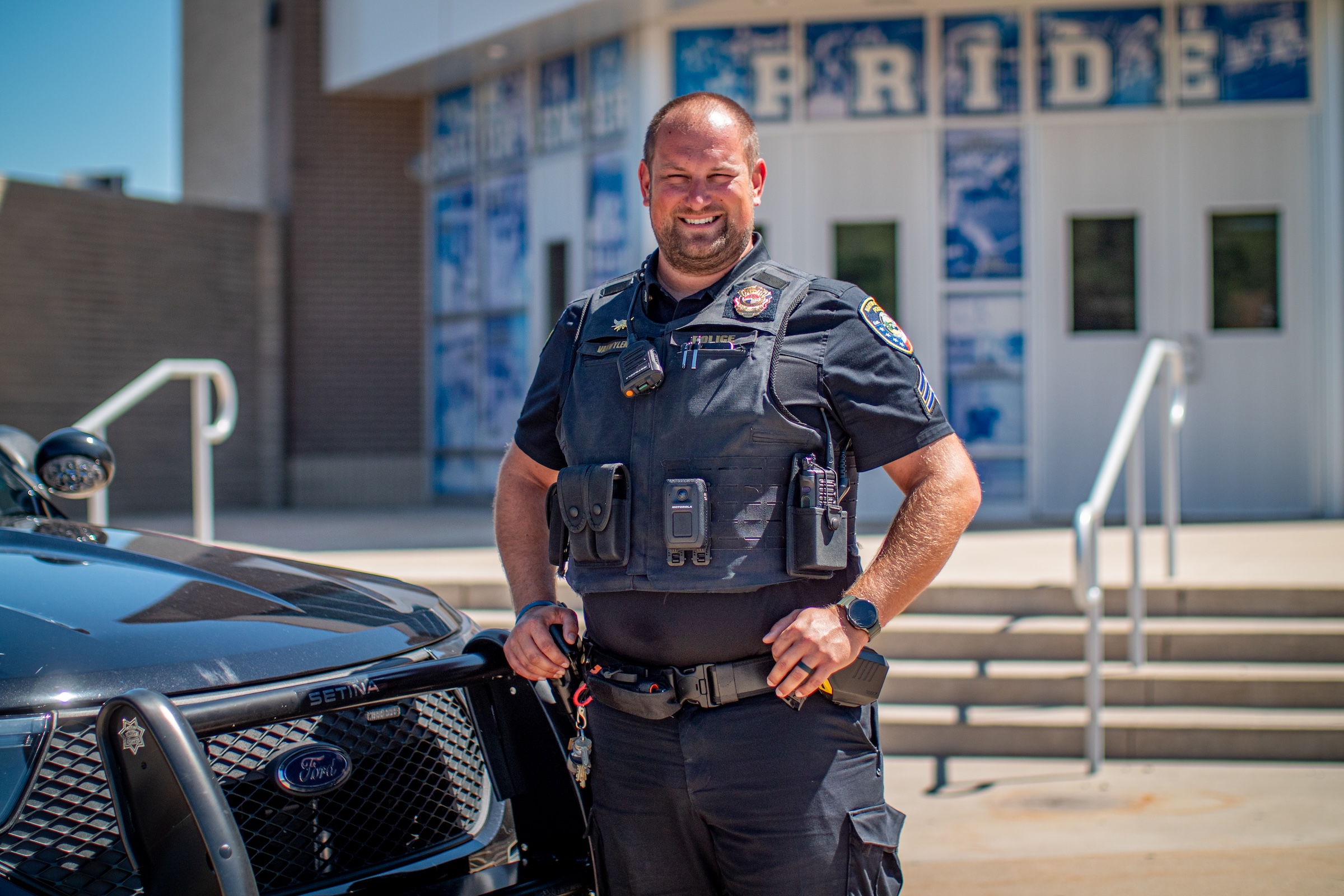
“If we can come in using a key rather than tools off the truck, plywood is never a good look on a business,” said Don VanderKooi, Fire Marshal for the Norton Shores Fire Department. “We don’t want to force entry or do damage. Doors and locks are expensive. It’s downtime for businesses that might be an added cost or expense.”
That box is a fire department key box, and for property owners across Norton Shores, the hardware inside it is about to change. Businesses with an existing key box have until December 31 to replace their lid.
What a Key Box Actually Does
Most people have walked past hundreds of them without ever noticing. It is a small, heavy steel box on the outside wall of a building that holds keys the fire department can access when nobody is there to open the door.
“Some business owners never knew that was there,” VanderKooi said. “I walked by that; I didn’t know what it was for. And then when people become a little bit more aware, they start to see it’s at the bank, it’s at all of the businesses.”
Fire code requires them on certain properties, and the reason is straightforward. Without one, crews arriving at a locked building have two choices. They can wait for a keyholder to drive in, which VanderKooi said can mean 20 minutes or half an hour on scene, or they can force the door.
Michigan winters make the point even more urgent. A sprinkler pipe freezes and bursts, a water flow alarm trips, and the clock starts running on water damage.
“If we can go to the outside of the building, go to our key box, grab a key, get inside the building, guys don’t have to take tools off the truck, force entry, reduce injury,” he said. “So we can gain access quickly, mitigate the issue, turn the valve off, stop the flow of water, or put the fire out. But at the end of the day, businesses can still lock their front door and secure their building.”
The keys inside matter as much as the box itself. VanderKooi encourages owners to think past the front door and include keys for interior offices, elevators, and the fire riser room.
“Having those keys is like going to a motel and needing a room access key to find out where the smoke is,” he said. “If you’re that hotel owner, you don’t want the fire department busting down all the doors in the hotel to find out there’s only smoke in one room.”
Why the Change Is Happening Now
The key boxes on most Norton Shores buildings are Supra vaults with a Bluetooth lid. That lid is a second-generation product, replacing an older keypad version that ran on batteries and, as VanderKooi put it, had batteries that were dying all over the place.
On December 31, Supra ends all support for the Bluetooth lid. After that date, the department can no longer service or remove them.
“If we don’t remove the Bluetooth lids before December 31, we run the risk of not being able to get them off,” VanderKooi said.
The replacement comes from Knox, the company most people associate with the KnoxBox name.
“Knox is really the Kleenex brand of fire department key boxes,” VanderKooi said. Knox is a woman-owned company based in Phoenix, Arizona, and its boxes are the national standard. VanderKooi noticed one on a building while at a conference in Clearwater, Florida, which is roughly how common they are.
The good news for property owners is that they don’t have to bring down the wall to install it. Knox makes a retrofit lid built to fit the existing Supra vault, so this is a door swap rather than a full box replacement.
It also solves the battery problem for good. The Knox retrofit lid has no battery.
“There would be no reason for a business owner to have to ever change this ever again,” VanderKooi said.
What Property Owners Need to Do
The retrofit lid costs $399 and is ordered directly from Knox at knoxbox.com. Look up the fire department during checkout, select the correct product, and Knox ships to the property owner.
Before ordering, contact the Fire Marshal’s office. VanderKooi verifies retrofit and new box orders so property owners do not buy the wrong product.
Fire Marshal Don Vanderkooi
[email protected]
231-799-6809, Ext. 1
Which product you need depends on what is already on your building. If you already have a Supra box, the retrofit lid is the answer. If there is no key box at all, the property needs a complete KnoxBox system.
If you are not sure what you have, the department will come look.
“If they don’t know if they have this box or not, they can call us,” VanderKooi said. “We can come out and take a look at it.”
Crews are not waiting for the phone to ring, either. Firefighter Dax Elm has been going business to business, removing Supra lids, returning keys to owners to hold in the meantime, and coming back to reinstall once the new lid arrives.
That visit is also a chance to catch a problem that is more common than owners expect. Locks get changed and rekeyed over the years, and the key in the box stops working long before anyone notices.
Full ordering information is posted on the City website at nortonshores.org under the Fire Department section.
Why the Department Went Electronic
Knox offers both mechanical and electronic systems. Norton Shores chose the electronic eKey, and the reasoning comes down to trust.
The eKeys are stored in a secured vault inside the apparatus, not loose in the truck. A firefighter enters a PIN code to release the key, then enters it again to wake the key up before it will open anything. Every use is logged.
“This mechanical key will never tell me who used it or what locks it opened,” VanderKooi said. “This has an audit trail. It’ll tell me who used the key, when they opened it, what they opened.”
If an employee retires or moves on, their access is removed from the back end in a few seconds. And if an eKey ever goes missing, it stops working on its own if it is not returned to its cradle within a set window.
The alternative carried real risk. A lost mechanical master key would be a master key to every box in two cities.
“The fire department is a service that the community has put a lot of trust in,” VanderKooi said. “We’ve gained that trust over many years. A lost key would be one way to lose that trust.”
What This Means for Homes
Key boxes have been a commercial requirement, but VanderKooi is working to bring the same idea to residents who need it most.
The department has applied for a grant to fund 100 residential Knox boxes, offered through a loaner program. Each box holds a single front door key and mounts at the entry, accessible from outside.
The residents he has in mind are the ones where minutes count, and the door is the obstacle. An elderly parent prone to falling. Someone in hospice. Anyone who cannot get to the door.
“If the fire department can gain rapid access without forcing entry, breaking a door, coming in through a window,” VanderKooi said, “because at the end of the day, if we need to get in, we’re going to get in.”
Firefighters have a running joke about the master key on the truck: it is an axe.
Don’t Wait Until December
A key box will not eliminate the 3 a.m. phone call entirely. It changes what happens while the owner is still getting dressed.
VanderKooi’s advice on timing is short. Sooner is better. Waiting until December means ordering during the same window as everyone else who waited, with a hard deadline behind it.
“It’s really about giving us rapid access to the building safely,” he said. “Keys are secure in the box. We take that with great care and respect.”